How to Choose the Right Software Development Vendors: Lessons from 6 Years as a Founder
Category:
Articles
Date:
February 20, 2025
Why Your Software Vendor Choice Matters
Choosing the right software development vendor is a critical decision that can directly impact your business success. Whether you need to extend your team through augmentation or build an MVP or custom software solution, selecting the right partner is key. In the latter case, the choice becomes even more crucial, as your success and whether your business reaches its goals depends on it.
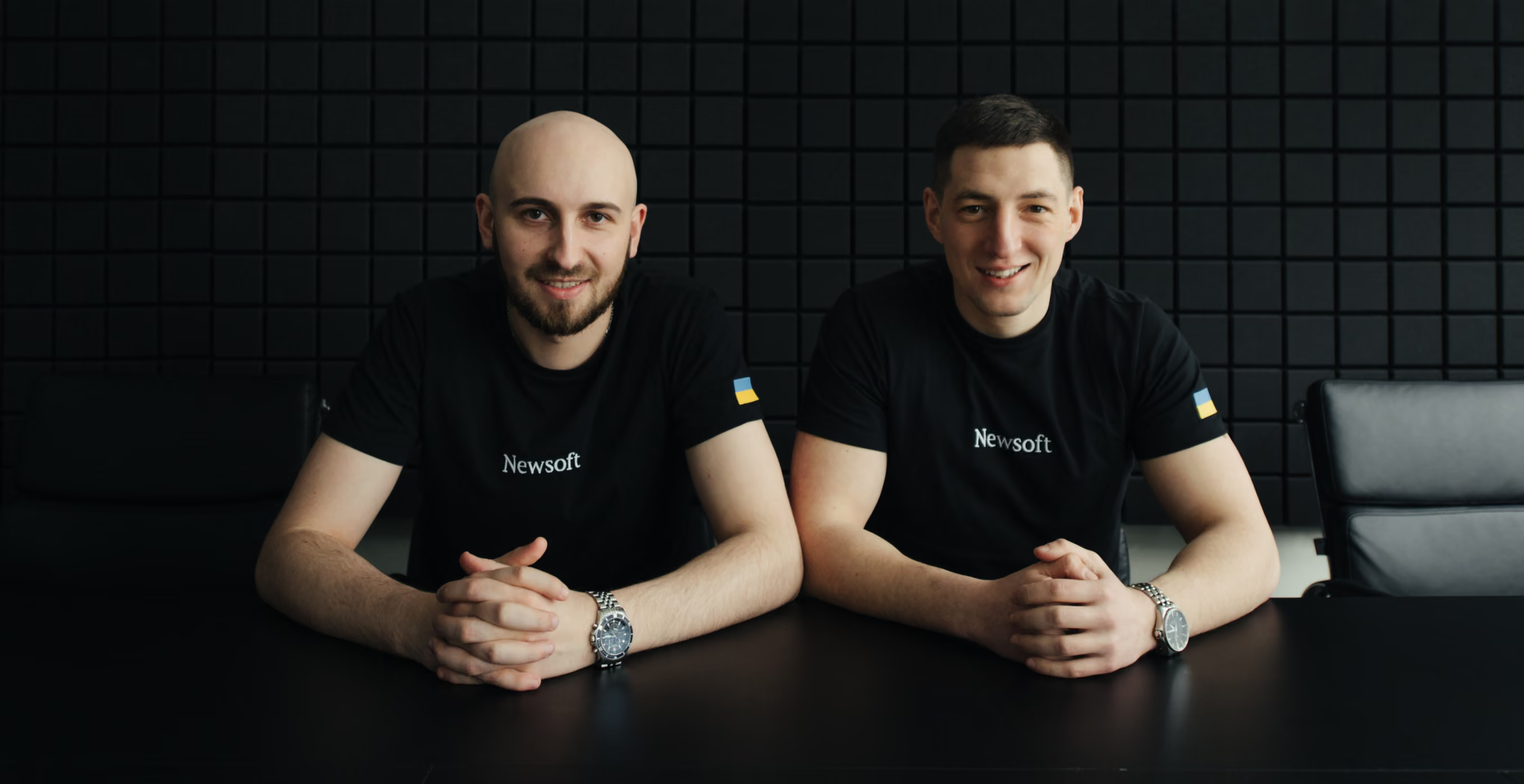
«I’ve been leading Newsoft for six years, during which we’ve worked with a wide range of companies, from early-stage startups launching MVPs to large enterprise-level businesses across the US, UK, Netherlands, Israel, and beyond.»
Volodymyr Tkach, CEO & Co-Founder
In total, we’ve collaborated with 30+ companies, worked with numerous engineers, and delivered solutions that drive real impact. Today, our team consists of around 40 skilled engineers working on more than 10 active projects.
Based on my experience, I want to share my insights on how to choose a software development vendor and what key factors to evaluate before making a decision. In this article, I’ll walk you through a step-by-step approach to selecting the right software development vendor, one that I’ve refined over the years and would personally follow if I were in your position today.
1. Define Your Needs Before Searching for a Vendor
Before you even start looking for a software development vendor, it’s crucial to clarify your needs and understand what you want to achieve. One of the most common mistakes businesses make is entering the vendor selection process without a clear understanding of their goals, scope of work, and technical requirements. This often leads to misalignment, delays, and unnecessary costs.
To avoid this, start by defining the key aspects of your project:
Are you developing a mobile app, a web platform, or an enterprise system?
What is your expected timeline for delivery?
What technologies or frameworks are required?
How much are you willing to invest?
What specific outcomes will define a successful project?
Once you have a clear understanding of your needs, you can determine the type of service that best fits your project. Do you need staff augmentation to strengthen your existing team with skilled engineers, or do you require full-cycle software development, where the vendor handles everything from planning and development to deployment?
For example, if you need to scale your team, look for a vendor with a strong talent pool or one that can quickly source and onboard top engineers. If you’re building a Shopify app, choose a partner with proven expertise in Shopify development and a track record of successfully completed projects.
Clearly defining your needs helps you identify the required skills, determine key roles within the vendor’s team, and make an informed decision. The more precise your requirements, the greater your chances of finding a vendor that can truly deliver.
2. Where to Find Trusted Software Development Vendors
Finding the right software development vendor depends on your network and research approach. If you have a strong professional network in the software industry, the best way to start is by asking for referrals. If someone you trust has successfully worked with a vendor, they can provide a verified recommendation. Referrals are valuable because they come from real experience, reducing the risk of working with an unreliable partner.
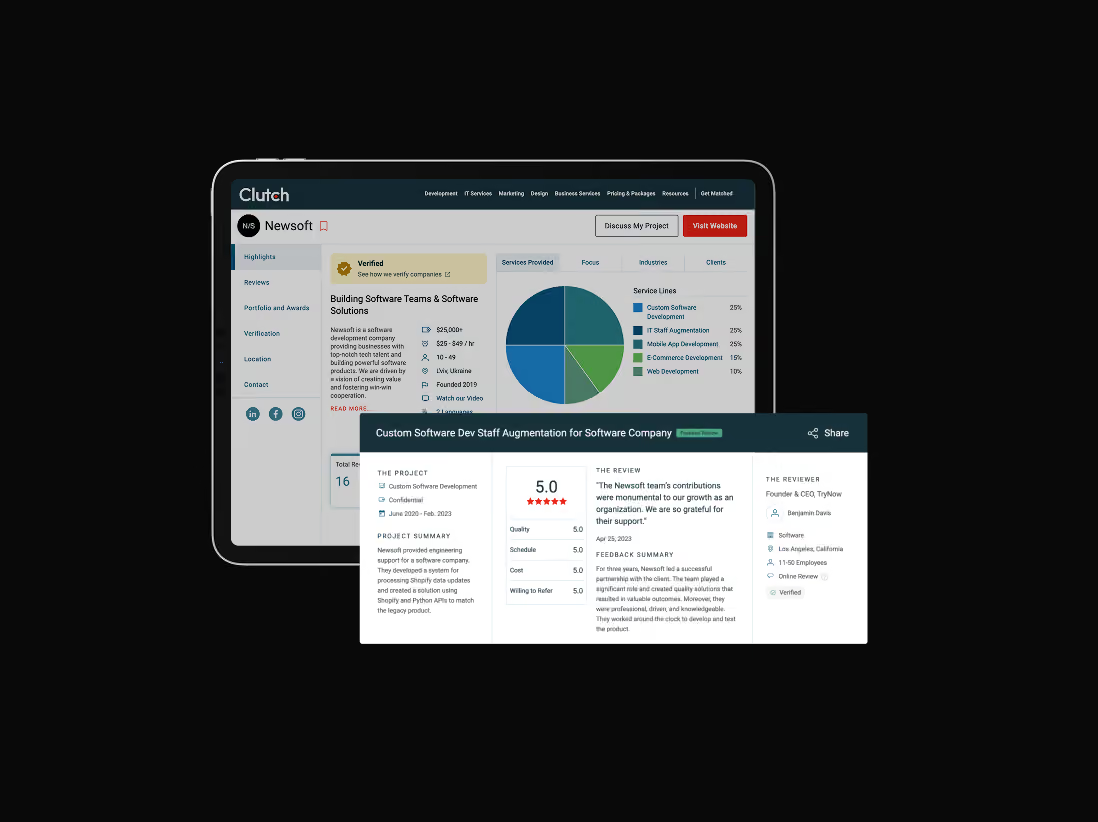
If you don’t have relevant connections, you can explore review platforms like Clutch, where you can:
Read client reviews and success stories.
Explore detailed ratings on vendor performance.
Analyze vendors’ industry expertise and past projects.
Another powerful tool is LinkedIn. With Sales Navigator, you can filter vendors by company size, location, industry, and other key criteria to find the best match for your needs.
By combining referrals, review platforms, LinkedIn, and even a simple Google search, you can gain valuable insights into potential vendors. Many companies publish detailed case studies, blog posts, and project showcases on their websites, offering a clear view of their expertise, and past results. Taking a structured approach to your search allows you to streamline vendor selection, create a strong shortlist, and improve your chances of finding a reliable development partner.
3. Evaluating Cultural Alignment
When choosing a software development vendor, culture fit is just as important as technical expertise. It’s crucial to define what you value in people and teams to find a vendor whose values align with yours. This alignment fosters a win-win collaboration, where both sides create value for each other and enjoy working together.
To evaluate culture fit, ask yourself:
Work Environment — Do you prefer a team that works remotely, in an office, or in a hybrid model?
Communication & Responsiveness — How fast do you expect responses, and how quickly do you respond yourself?
Work Ethic — Do you expect your vendor’s team to be highly disciplined and hardworking?
Proactivity — How important is it that the vendor’s team takes initiative rather than just following instructions?
Workstyle Preferences — Do you prioritize flexibility, or do you expect a results-driven culture?
Quality Expectations — How high are your expectations, and do they align with the vendor’s?
Success Metrics — What criteria define a successful project for you?
Cross-Cultural Collaboration — How comfortable are you working with teams from different cultural backgrounds?
4. How to Verify If a Software Development Vendor Is Legitimate
One of the most important steps in choosing a software development vendor is verifying whether they are real and trustworthy. With so many companies in the market, it’s essential to confirm their track record, reputation, and real experience. You can leverage social media, professional platforms, and online reviews to gather information.
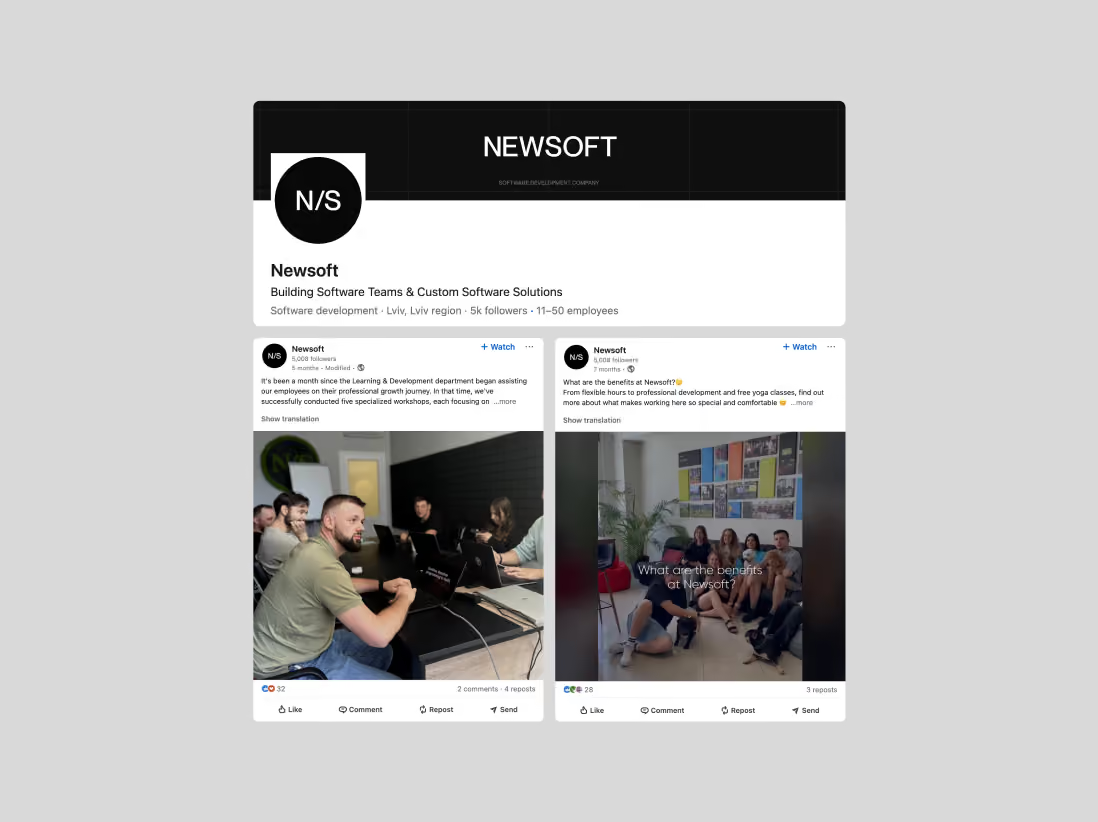
Check Their LinkedIn Presence
Start by reviewing their LinkedIn company page, employees, and leadership team (founders, managers, developers). Key factors to assess:
Company Activity — Do they regularly post updates, insights, and case studies?
Employee Profiles — Do their developers and managers have a verifiable work history with the company?
Company Age Verification — If they claim to have been in business for five years, do their LinkedIn posts and employee histories support that timeline?
A company with no active employees, engagement, or historical posts is a major red flag. Lack of transparency often signals inexperience or unreliability.
Cross-Check Other Social Media
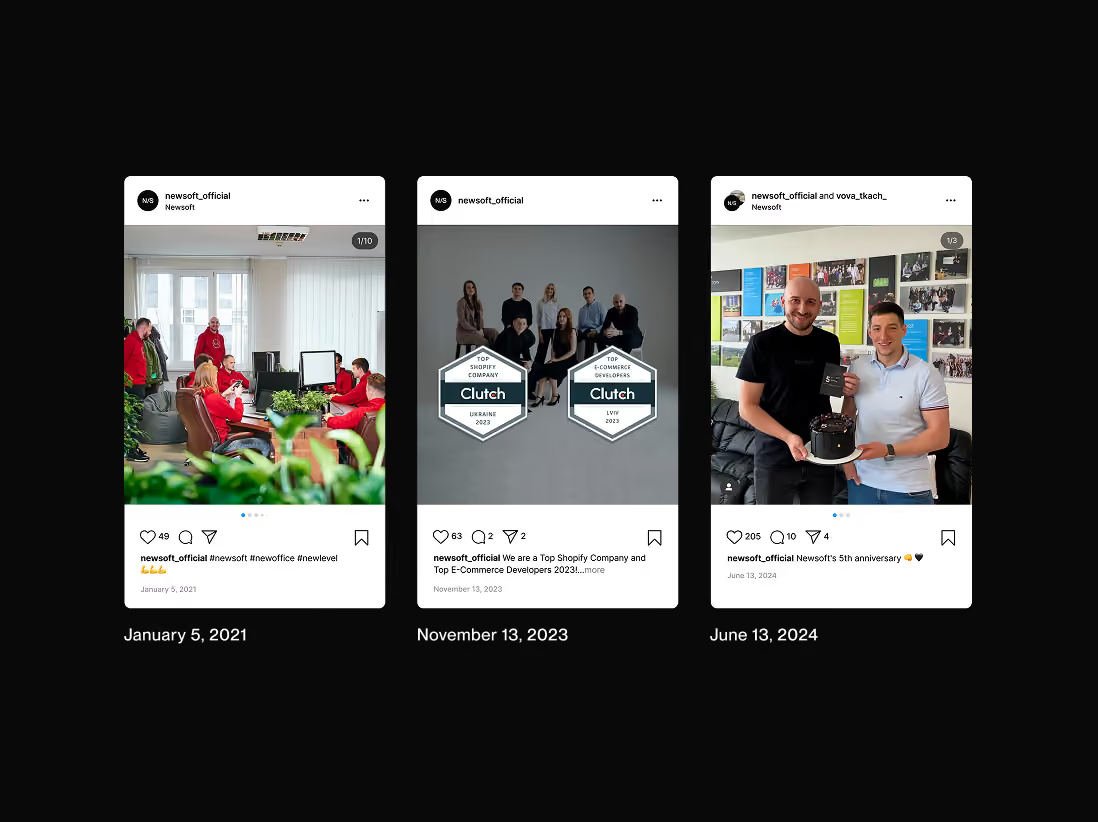
Beyond LinkedIn, check their Instagram, Twitter, and Facebook to learn more about their company culture. Many businesses share team photos, office life, and behind-the-scenes moments, which can provide valuable insights.
Do they showcase their real team?
Is their branding and messaging consistent across platforms?
If they claim to have an office, do they share posts about their office space and team events?
Social media can help you validate their history — if they claim to have been active for years, you can scroll through past posts to confirm their presence and engagement.
Review Their Website
A professional website is important, but it alone doesn’t prove legitimacy. Websites can be created in days, making it difficult to verify a company’s history. However, you can still assess key factors:
Brand Consistency — Does their branding and messaging align with their LinkedIn and social media presence?
Case Studies & Portfolio — Do they showcase real projects with measurable results?
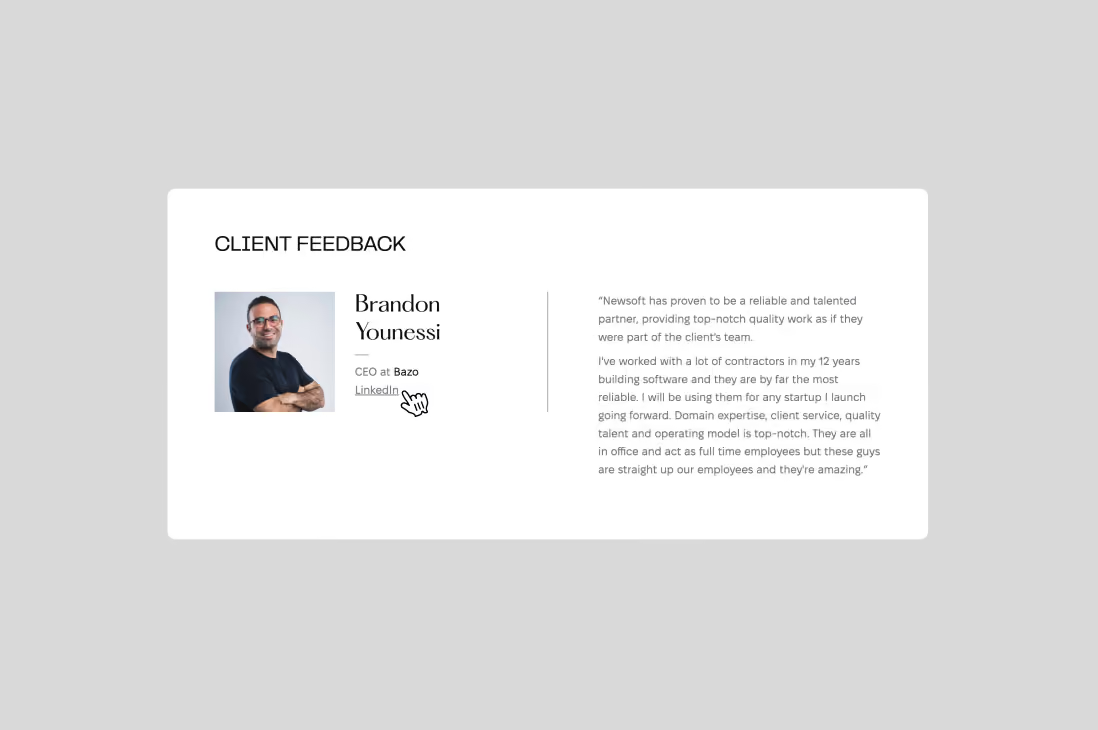
Client Testimonials — Are they linked to actual people and recognizable companies?
Validate Their Reviews on Clutch and Other Platforms
Platforms like Clutch, GoodFirms, and G2 provide verified client reviews, but it’s important to assess their credibility. Look for:
Depth and Specificity — Are the reviews detailed, or do they seem generic?
Project Validation — Do they mention real projects with measurable outcomes?
Reviewer Legitimacy — Are the companies that left reviews real and verifiable?
To go a step further, Google the companies behind the reviews or check their LinkedIn profiles to ensure they are credible businesses, not fabricated endorsements.
Verify Their Work and Testimonials
The best way to confirm whether a vendor delivers real results is by analyzing their past projects. If they claim to have built a mobile app for a football club, you can:
Check the club’s official website — Do they mention the app?
Download the app — Is it available on the App Store or Google Play? Does its quality match the vendor’s claims?
Validate testimonials — Are they from real people with verifiable LinkedIn profiles?
Match Their Claims with Reality
A trustworthy company will have a consistent online presence across multiple platforms. A successful verification process should confirm:
A strong LinkedIn presence with real employees and company history.
Active social media showcasing real team members and office life.
A well-structured website featuring case studies and authentic testimonials.
Verified client reviews on platforms like Clutch.
Tangible products they have built that you can find, download, or use.
On the Other Hand, Watch for Red Flags
Be cautious if you notice any of the following warning signs:
Unverifiable history — Claims of 10+ years in business but no historical proof (no old LinkedIn posts, long-term employees, or past projects).
Lack of real employees — No employees listed, or only incomplete or fake-looking profiles.
Inactive or missing social presence — No social media activity, an empty or rarely updated LinkedIn page.
Questionable testimonials — Reviews that are overly generic or lack verifiable details (no real names, companies, or LinkedIn profiles).
Final Thoughts
By taking a few extra steps and checking multiple platforms, you can gain valuable insights into a potential vendor. This process helps you filter out unreliable companies, verify whether their claims align with reality, and assess if their culture matches your expectations.
A trustworthy, well-established vendor has nothing to hide. Their track record will be transparent, with consistent proof of their work visible across multiple sources.
5. How to Evaluate a Vendor’s Engineering Team — Skills, Experience & Communication
A software vendor’s true capabilities aren’t just reflected in how well their founders or sales team present the company, it all comes down to the engineers who will actually build your product.
To ensure you’re hiring high-quality developers, take these key steps:
Interview Engineers, Not Just Managers — Sales teams may deliver an impressive pitch, but the real test lies in the technical team. Speak directly with the engineers who will be working on your project.
Assess Technical & Soft Skills — Can they clearly explain their work? Do they approach problems with a solution-oriented mindset? Strong technical skills mean little if they lack the ability to communicate and collaborate effectively.
Review CVs & Past Experience — Ask for the CVs of the engineers assigned to your project. Look at their previous work, technologies they’ve used, and projects they’ve contributed to.
Conduct Technical Discussions — Go beyond just reviewing resumes; engage in discussions to evaluate their problem-solving skills, adaptability, and ability to handle real challenges.
Review Their Work and Case Studies
A vendor’s past projects provide valuable insight into their capabilities. Request case studies and evaluate:
Project Types — What industries and solutions have they worked on? Do they align with your needs?
Technical Expertise — Do they have experience with the technologies and frameworks your project requires?
Project Complexity — Have they successfully handled projects of similar scale and difficulty?
However, simply reviewing case studies isn’t enough. Pay attention to how they present their work — do they provide concrete details, measurable results, and real client testimonials? A well-structured case study should showcase problem-solving skills, technical depth, and business impact.
How They Handle NDAs and Confidentiality
Here’s an important lesson from my experience: At Newsoft, we have strict NDAs for most projects, meaning we cannot share confidential details. While searching for designers, some candidates sent us Figma links to full projects they had built for previous clients — projects that were clearly protected under NDAs.
This was a major red flag because:
If they disclose confidential work from past clients, they may do the same with your project.
It signals a lack of professional ethics and disregard for agreements.
When requesting case studies, pay attention to how vendors share them. A professional company will:
Provide detailed insights without violating NDAs.
Offer a high-level overview rather than exposing full project details.
If a vendor is too willing to break confidentiality, consider it a clear warning sign — your data may not be secure with them.
Verify the Quality of Their Delivered Work
The best way to assess a vendor’s capabilities is by analyzing the actual software they have built. Instead of relying solely on case studies, test their work firsthand:
If they claim to have developed a fitness app — Search for it on the App Store or Google Play.
Download, test, and evaluate — Assess usability, performance, and overall quality.
For Shopify or web projects — Analyze site speed, functionality, and user experience.
A vendor’s past work is the best predictor of what they will deliver for you, so this step is crucial. By looking beyond surface-level promises and conducting a thorough technical and ethical assessment, you can ensure you’re choosing a vendor with the skills, experience, and integrity to deliver high-quality results. A transparent vendor will always be open about their team’s expertise and past work.
6. Communication & Workflows — Ensuring a Smooth Collaboration
Effective communication and well-structured work processes are essential when selecting a software development vendor. Before starting a collaboration, consider key factors that impact efficiency:
Location & Time Zones — Where is the vendor based, and how does it align with your working hours?
Language Proficiency — Do they speak your preferred language fluently enough for smooth collaboration?
Communication Style — Are they clear, responsive, and proactive in discussions?
These elements directly influence workflow efficiency, ensuring that expectations are understood, feedback is implemented correctly, and potential misunderstandings are minimized.
Time Zones and Meeting Schedules
One of the most critical factors to consider is how time zone differences will impact daily communication. Ask yourself:
✔ How often do you need to communicate with them?
✔ How frequently do you require meetings?
✔ What time of day would be most convenient for your meetings?
For example, if you’re considering team augmentation, time zone alignment becomes even more important. Let’s take Newsoft, a company based in Lviv, Ukraine, working with a client in California:
In Los Angeles: 8–9 a.m.
In Ukraine: 6–7 p.m.
If early morning meetings don’t suit your schedule, managing a distributed team across these time zones might be challenging. However, if you’re a morning person who starts work at 6–7 a.m., this setup could work perfectly. To ensure seamless collaboration, analyze your schedule and determine whether a vendor’s location aligns with your workflow.
Team Augmentation vs. Custom Software Development
The impact of time zones on collaboration varies depending on the type of service you need:
Custom Software Development — Works well across different time zones since it requires fewer daily meetings. Clients provide requirements and ideas, while the development team works independently with periodic check-ins.
Team Augmentation — Requires frequent communication, making time zone differences a potential challenge. If your team is split between Los Angeles and Ukraine, for example, limited working hours overlap could make daily collaboration difficult.
Face-to-Face Meetings
Some businesses prefer occasional in-person meetings with their vendors. If this is important to you, discuss it upfront and establish a clear plan. For example, you could arrange for the vendor’s team to visit your office once per quarter for in-person meetings. This approach is particularly valuable for long-term projects that require close collaboration, strategic planning, and stronger team alignment.
Plan for Communication Setup
Before committing to a vendor, envision your future communication process and ask yourself:
✔ Will this setup work for me?
✔ Will the time zone difference be an advantage or a challenge?
✔ Am I comfortable managing a team across different locations?
Final Thoughts
Time zone differences can be either an advantage or a challenge, depending on how well you plan for them. The key is to ensure that communication doesn’t become a bottleneck in your collaboration.
By analyzing these factors upfront, you can turn time differences into an asset — creating a smooth, efficient workflow instead of a frustrating challenge.
Summary: Ensuring a Successful Collaboration
Let’s sum it up. To build a strong and productive partnership with your software development vendor, every step of the evaluation process should lead to a clear and confident yes.
From start to finish, each factor plays a crucial role:
Do they have the expertise to meet your needs? Can they deliver the solution you require?
Is there a culture fit? Do you share similar values, work ethics, and expectations?
Are they a real, established company? Have you verified their presence in the market?
Do they have both strong leadership and skilled engineers? Are they capable of executing high-quality work?
Is communication smooth and effective? Do you share the same energy, work style, and vision of success?
If you can confidently say yes to these questions, you’re likely to build a successful, win-win partnership that leads to long-term success.
If you have any questions, feel free to ask in the comments or reach out to me on LinkedIn. I’d be happy to help you evaluate and choose the right software development vendor to move your business forward.
EXAMPLES FROM MY EXPERIENCE: How Values Impact Collaboration
1. The Energy of Hard Work and Discipline
One of the key factors that define a successful partnership is alignment in work ethic and discipline. I consider myself highly disciplined and hardworking, not bound by traditional working hours or strict work-life balance rules. I prioritize fast responses, efficiency, and keeping projects moving forward without unnecessary delays.
I have clients who share these values — founders who are equally committed, disciplined, and driven. Working with them is one of the most rewarding professional experiences I can have. When they send an email at any hour, I respond within minutes, and they do the same. This creates a high-energy, highly efficient collaboration, where we both stay focused on delivering results, building great products, and moving forward without distractions.
With these clients, I feel fully engaged and motivated because our work approach and values are aligned. Our only goal is to create value and succeed together — without rigid processes slowing us down.
2. Transparency and Realistic Conversations
Another critical factor I value in partnerships is transparency and realism. I thrive in collaborations where clients are straightforward, practical, and open to honest conversations, rather than relying on artificial positivity.
For example, when something isn’t working well, they tell me directly, and we fix it immediately. If an engineer isn’t meeting expectations, they provide clear, constructive feedback instead of avoiding the issue or pretending everything is fine. In return, I do the same — I communicate openly about challenges, areas for improvement, and realistic expectations.
«This level of honest, constructive communication prevents misunderstandings and enables us to solve problems quickly rather than covering them up. I don’t believe in a culture where issues are ignored while layoffs are secretly planned. Instead, I prefer clear, solution-oriented discussions that help both sides improve and grow.»
Volodymyr Tkach, CEO & Co-Founder
3. The Role of Shared Values in a Successful Vendor Partnership
When a client and vendor share the same values, the collaboration becomes natural, productive, and enjoyable.
A founder with a strong work ethic, fast response times, and high discipline will likely enjoy working with Newsoft, as we share the same energy and commitment to success. Our collaboration will be fully engaged, efficient, and result-driven.
If a client prefers a different approach to work processes, response times, and project management, we can still collaborate, but the experience may not feel as seamless or fulfilling as with clients whose mindset aligns with ours.
A great example of this in action is how I approach work and collaboration. I value fast responses and discipline, without strict separation between work and personal time. I respond immediately and never delay important matters. When I work with clients and vendors who share this mindset, we create a highly efficient, synergy-driven workflow.
The same applies to communication styles — if direct interactions and a fast-paced work environment matter to you, your vendor should match that intensity.
Selecting the right software development partner it’s about finding a team that shares your vision, understands your priorities, and operates with the same sense of urgency and commitment. When you find that perfect fit, collaboration becomes effortless, and the results speak for themselves.

 Volodymyr Tkach, CEO & Co-Founder