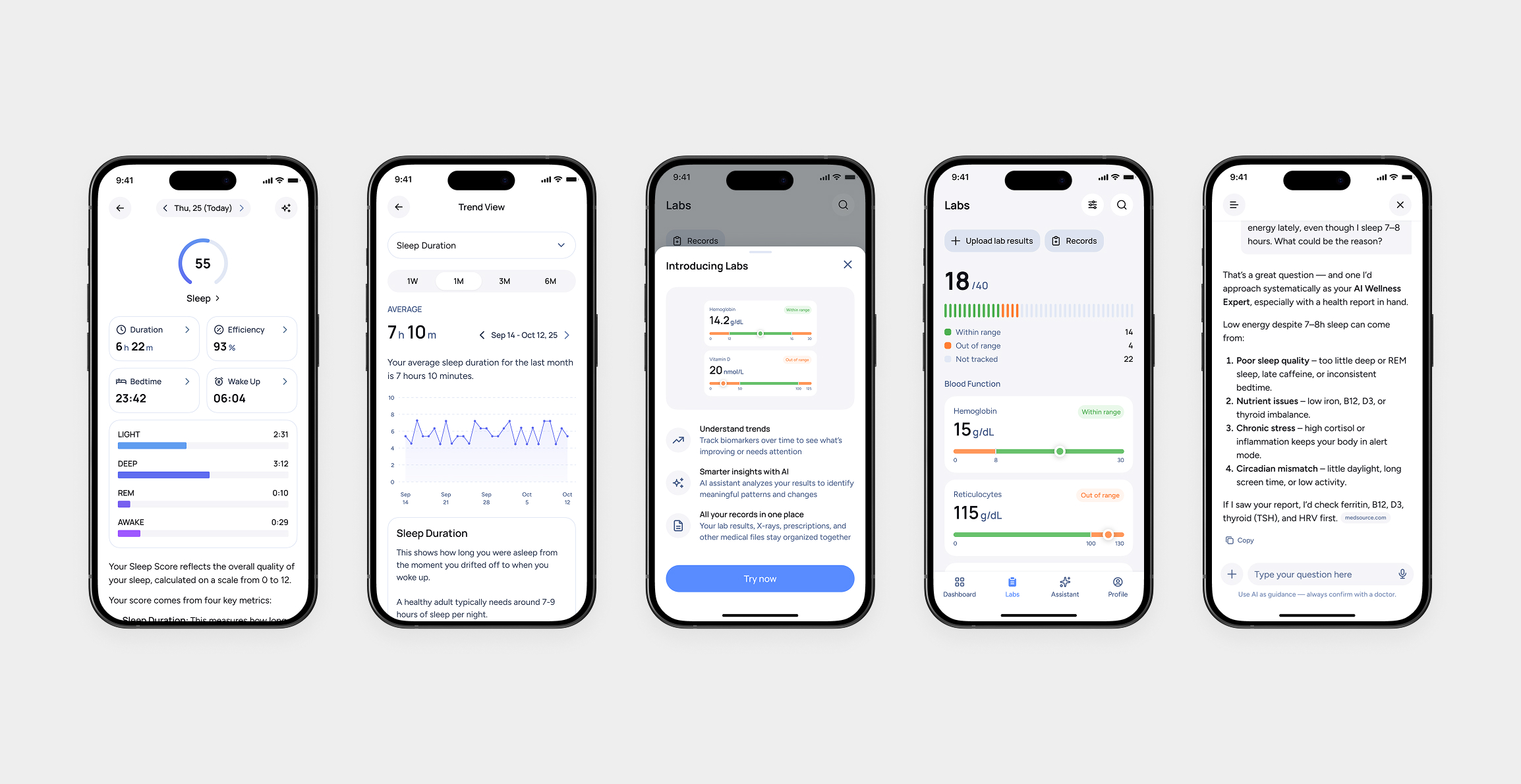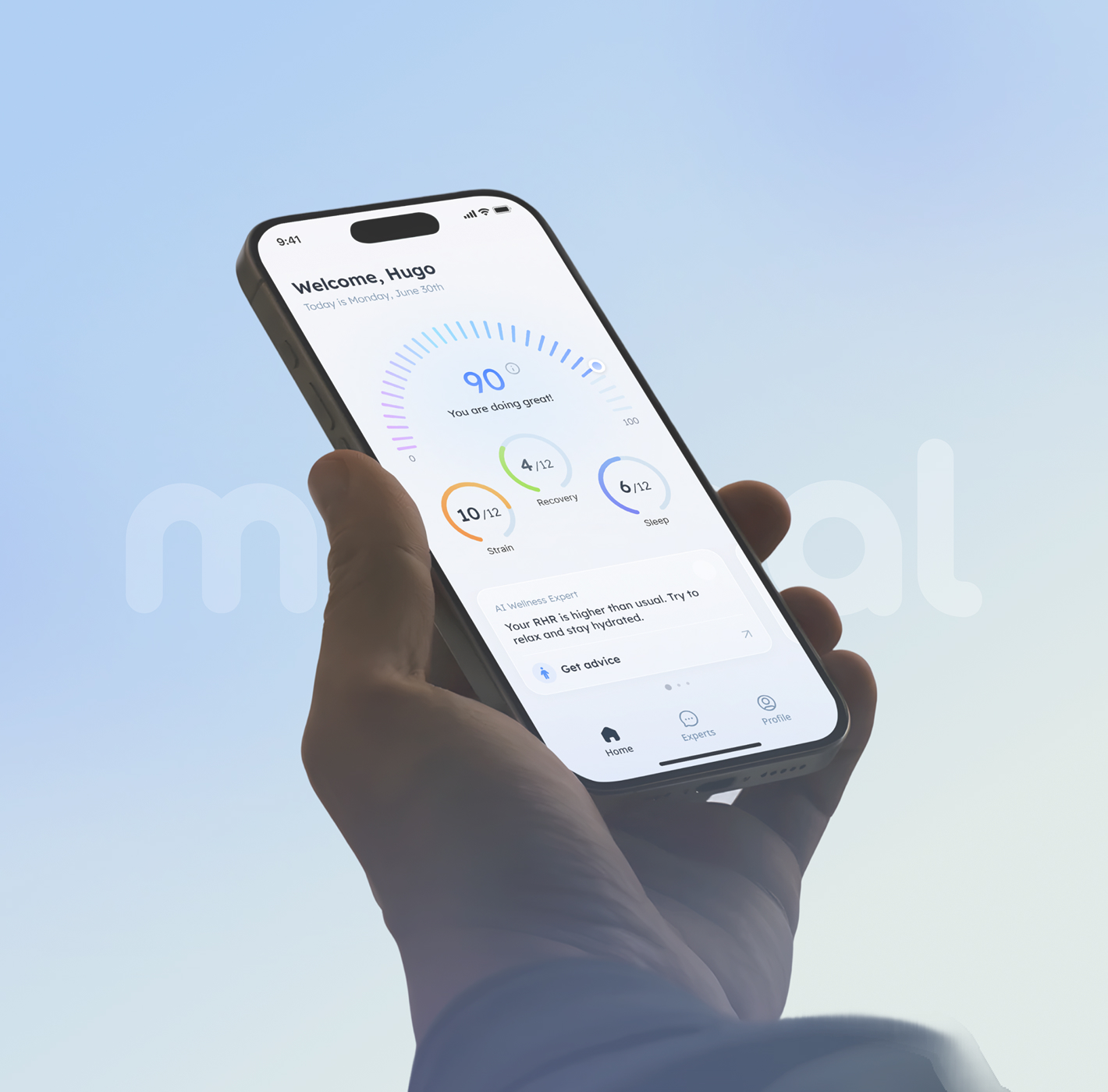
Personalisation, AI recommendations, and engagement are closely connected to a fundamental product question: what does your product actually know about the people using it, and how does that knowledge help them?
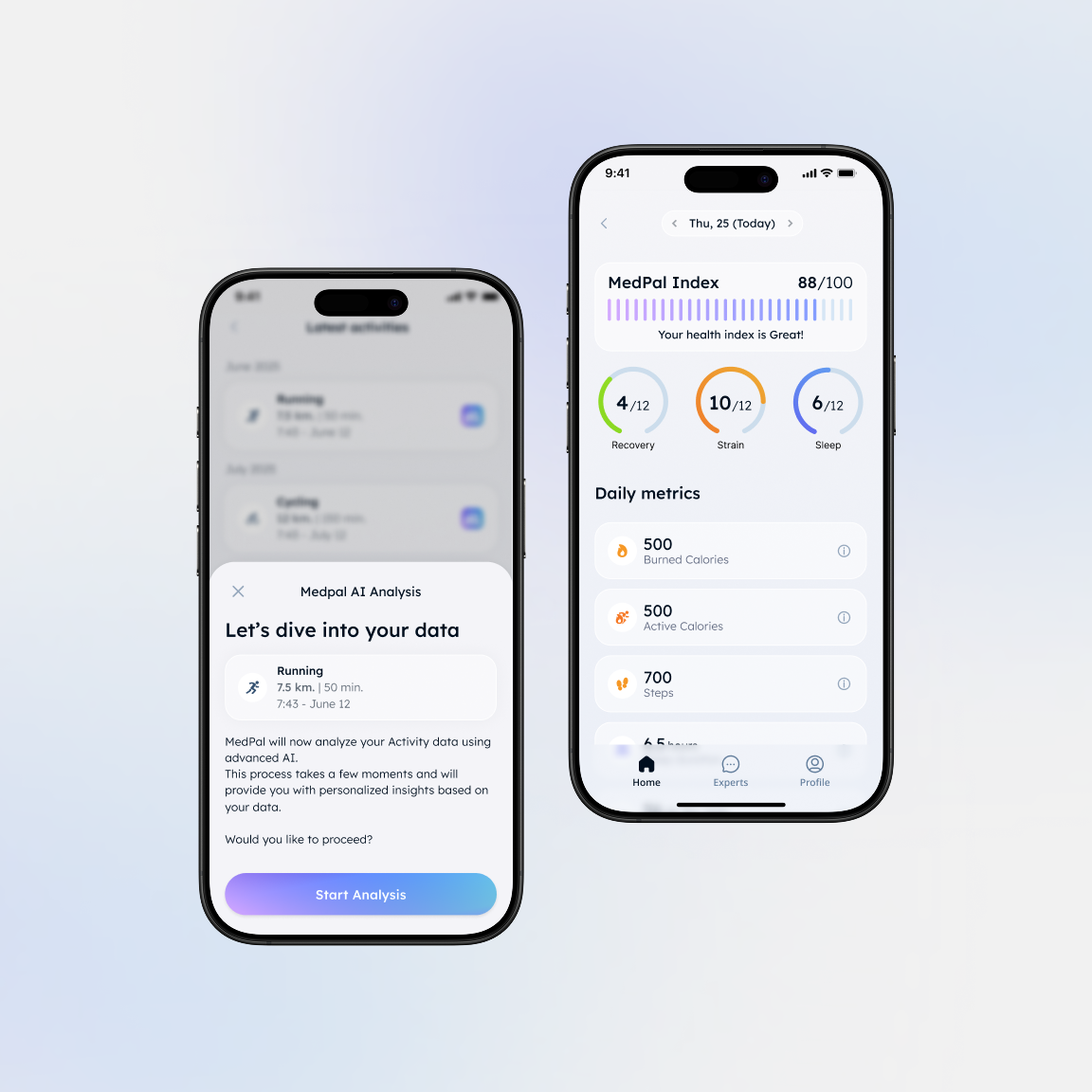
A sleep chart can show how long someone slept. An activity dashboard can record their movement. Yet someone looking at both may still wonder how those numbers relate to how they feel.
For wellness product teams, that gap is worth paying attention to. Collecting and displaying information creates a foundation. Helping someone interpret it requires another layer of product thinking.
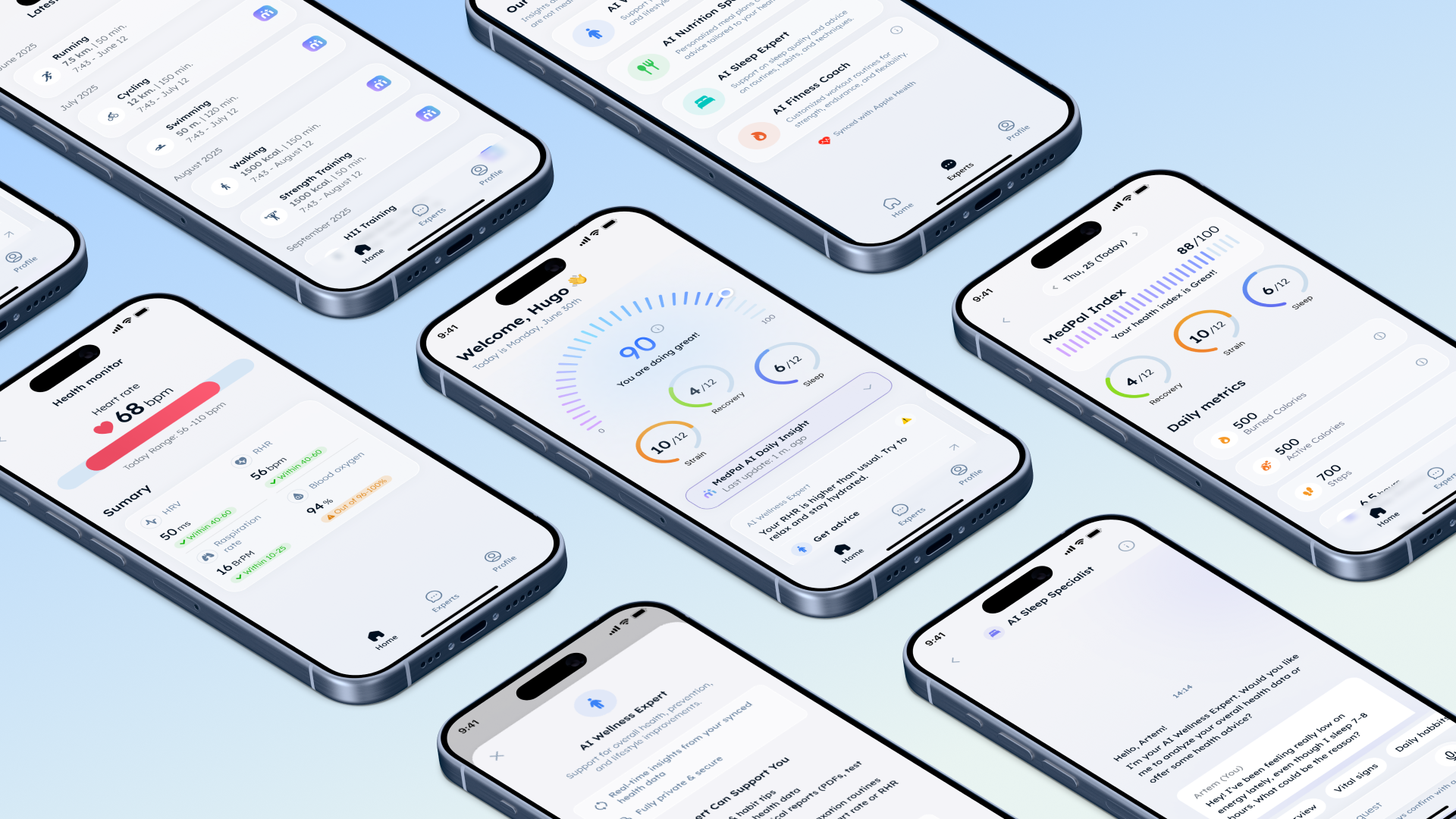
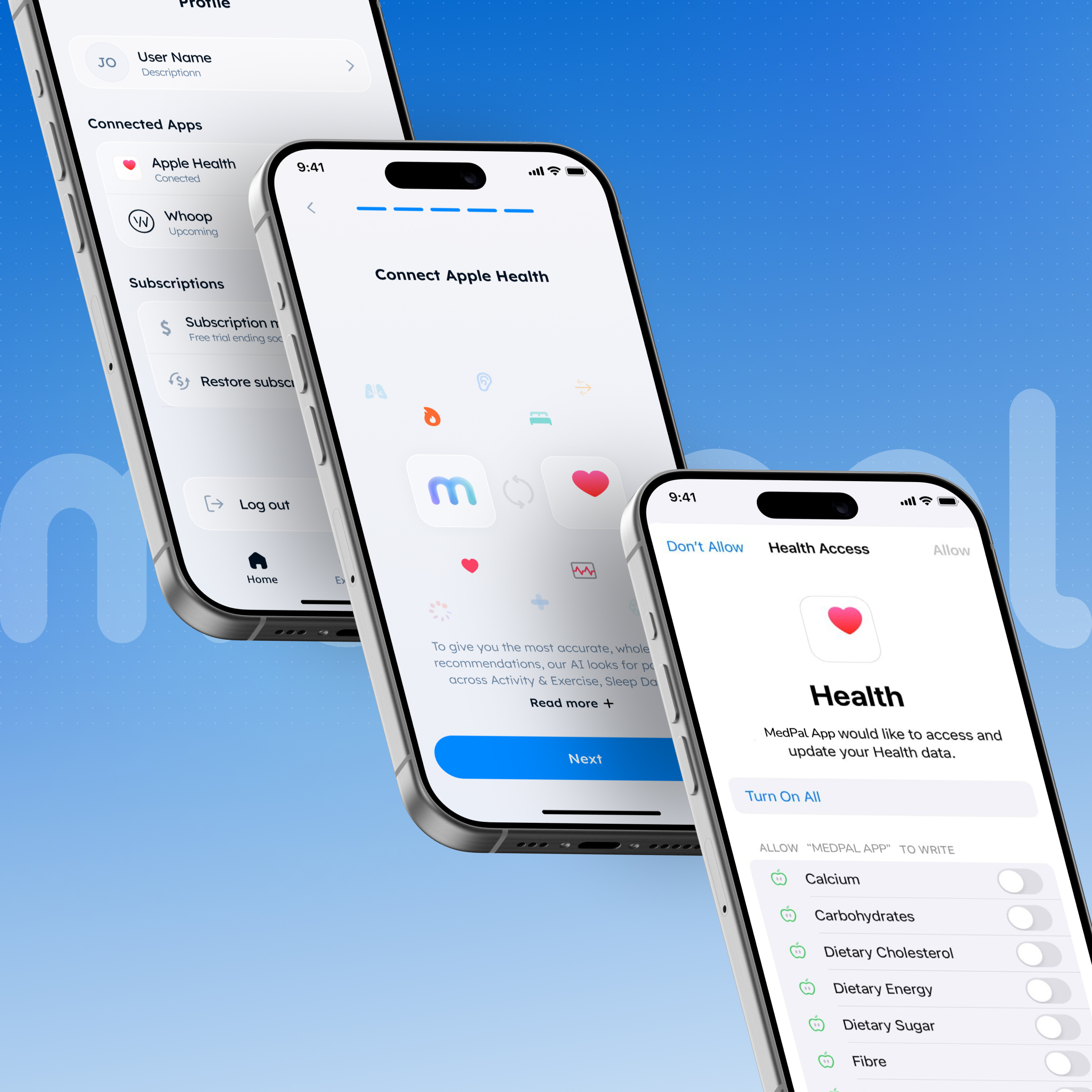
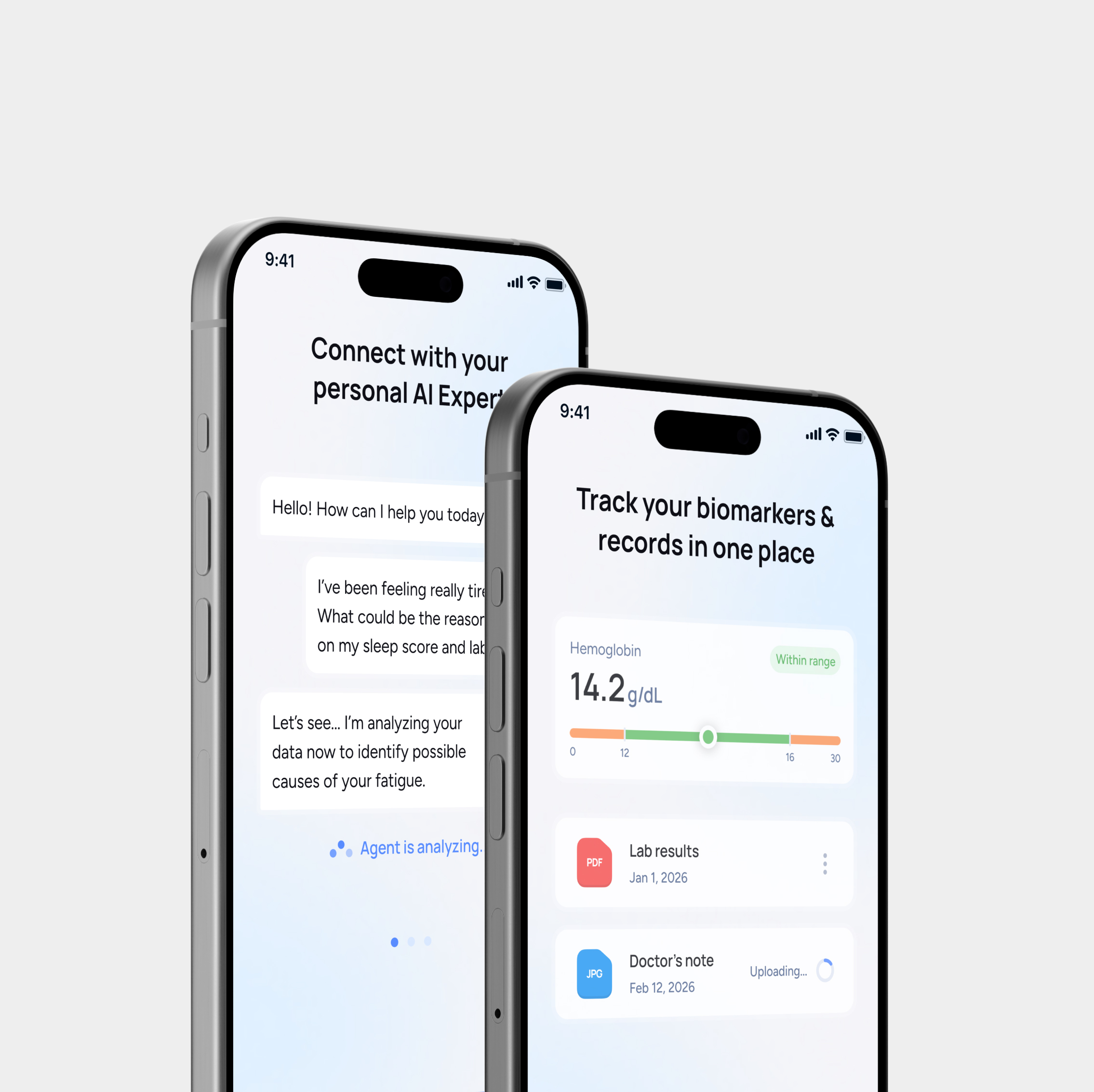
Through our work on MedPal, we explored how connected data, interface design, and AI could support that experience. The central question was how to make health and wellness information useful within a person’s everyday life.
Where tracking leaves room for more value
A useful starting point is to identify where the existing experience leaves people with unanswered questions. Can users understand a change in their data? Can they explore it alongside other relevant information? Do they know where to go for further support?
The answer might lead to a clearer explanation beside a metric, a personalised insight, or a conversation informed by their data. Each approach serves a different need.
Moving towards guidance means deciding which of these needs the product can meaningfully address and what context it requires. That gives product teams a concrete starting point for connecting data, design, and AI around a useful user journey.